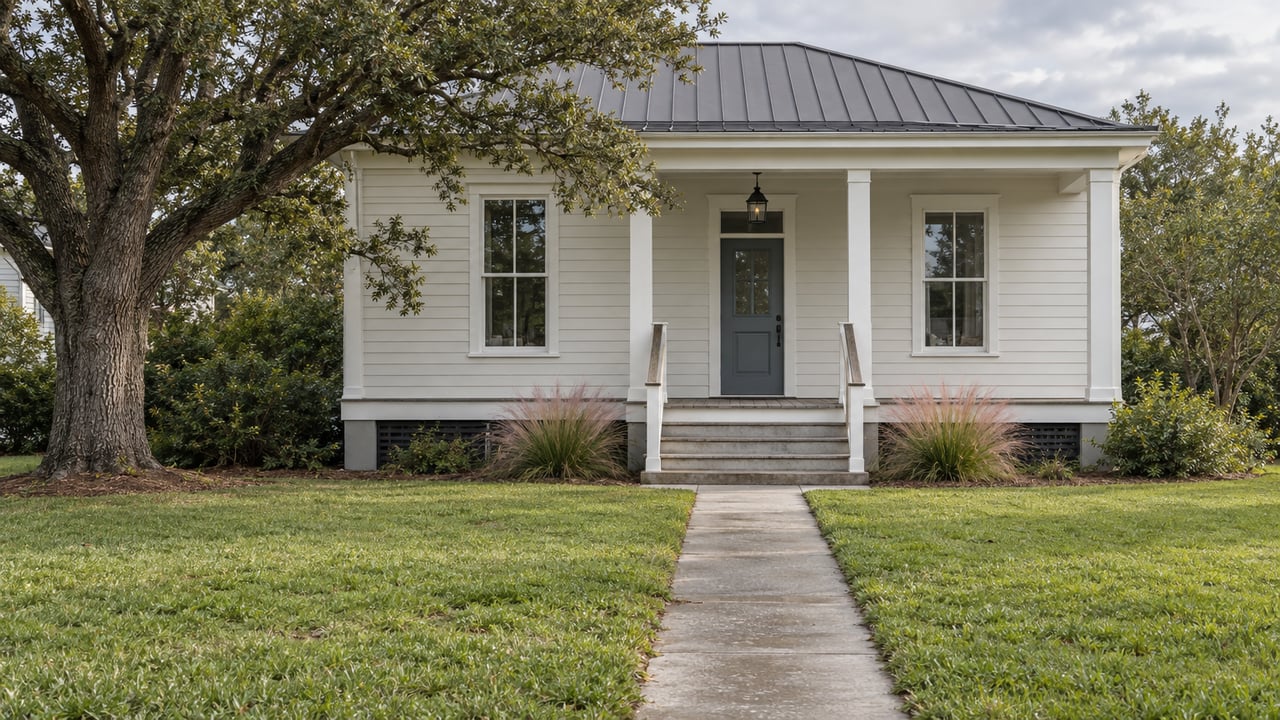
The Bridge Behind Leland's Price Discount
October 1, 2026
October 1, 2026
"This has just been a hair-raising thing that has went on too long," Leland Mayor Brenda Bozeman told her town council this week, WECT reported. She was talking about the Cape Fear Memorial Bridge, the only direct crossing between Leland and downtown Wilmington, and the seven-year fight over what replaces it.
If you've been comparing a listing in Leland to one in Wilmington, you've probably already clocked the price gap between the two markets. What most of those comparisons leave out is that the gap has always had a bridge built into it, and this fall is when the terms of that bridge finally get decided.
As of July 31, 2026, Zillow's home value index put Leland at $388,757 against $417,975 for Wilmington, a difference of roughly 7 percent. That tracks with what most buyers sense already: more house, more lot, and a newer subdivision for the same money once you cross the river into Brunswick County.
What that number doesn't show is the cost of getting back across. The Cape Fear Memorial Bridge, built in 1969, is the only direct route into downtown Wilmington from Leland's side of the river, and it's a four-lane steel lift bridge that NCDOT itself now calls functionally obsolete. Off-peak, the crossing runs 10 to 15 minutes. During the morning and evening rush, that stretches to somewhere between 20 and 40 minutes depending on traffic and whether the span happens to be up for a passing boat. Census Bureau estimates put the average one-way commute at about 18 and a half minutes for Wilmington workers and about 24 and a half minutes for Leland workers, a six-minute gap on paper that daily commuters say feels bigger in practice.
That gap is part of what you're pricing when you compare the two markets. It's just never been broken out as a line item until now, because the bridge itself is finally up for a decision.
NCDOT has narrowed the replacement down to two designs, and they don't just differ in height. They differ in what happens to the streets on either end.
| Alternative A (movable span) | Alternative B (fixed span) | |
|---|---|---|
| Vertical clearance | 65 feet closed, 135 feet when lifted | 135 feet, fixed |
| Cost to build | Higher, requires lift mechanism | About $80 million less |
| Wilmington-side access | Similar footprint to today's bridge | New trumpet interchanges reroute traffic off Third Street onto Fifth Avenue |
| Ongoing maintenance | NCDOT already spends about $550,000 a year keeping the current lift span running | Cheaper to maintain long term, per NCDOT officials |
Alternative B is the cheaper build and the cheaper bridge to run for the next fifty years. It's also the one that opponents have taken to calling "Option Bad," because the Environmental Assessment NCDOT released in July 2026 shows what the trumpet interchange actually costs the neighborhood around it. The 135-foot design permanently removes two homes and two businesses, brings noise impacts to 102 parcels, and requires right-of-way from at least 63 more. Drivers coming off the bridge would no longer exit onto Third Street. They'd be routed to Fifth Avenue instead, which runs straight past the Kenan Fountain at Market Street, a fountain the city just spent $335,000 rebuilding after a 2023 collision, and which was narrowed to two lanes last year to add bike paths. Wilmington council member Cassidy Santaguida raised exactly that conflict at a recent meeting: more bridge traffic funneling into a street the city just made narrower.
Here's the part that changes the math for anyone weighing a Leland purchase against a Wilmington one. The Wilmington Urban Area Metropolitan Planning Organization, the regional body that includes Leland, Wilmington, and the beach towns, has already authorized tolling the new bridge. That authorization stands unless the board reverses it, and the board has until February 2027 to do so.
There's a second clock running alongside it. Wilmington city staff have said the project needs to be locked in and shovel-ready by September 2027 to remain eligible for a $242 million federal grant. That's less than a year from now. Whatever design NCDOT settles on, and whatever the WMPO decides about tolls, both decisions are close.
None of this means a toll is guaranteed on your commute if you buy in Leland this year. It means the toll question is still genuinely open, and it's being resolved on a timeline measured in months, not the years most bridge fights drag on for.
The council resolution Mayor Bozeman was reacting to asks the Army Corps of Engineers to revisit a 1996 study, the one that originally set the bridge's required clearance at 120 to 147 feet based on the ships expected to pass beneath it. Council member Veronica Carter, who brought the resolution forward, pointed out that those ships largely don't use the river anymore. WECT reported that she told the council, "We're not going to just sit here and roll over and say we want to pay a toll," arguing the bridge now lifts mostly for recreational boats rather than the freight vessels the old study assumed.
The resolution calls for what's known as a Section 216 review, a process under the 1970 Flood Control Act that lets the Corps reexamine an old navigation study when conditions have changed. Council member Leland Hyer asked that Wilmington City Council be added to the list of governments objecting to the current design options, and that the letter to federal representatives go to both the North Brunswick Chamber of Commerce and the Wilmington Chamber of Commerce, noting the topic comes up in the Wilmington chamber's newsletter almost every week.
Leland isn't alone in this. New Hanover County commissioners and Wilmington City Council have both already sent similar letters or resolutions asking for a smaller, unfunded bridge and no toll. At NCDOT's two public hearings last month, one at Cape Fear Community College downtown and one at the Leland Cultural Arts Center, 79 people signed up to speak. Almost everyone in Wilmington asked for the 65-foot lift bridge with no tolls. In Leland, 29 spoke, and nearly all of them opposed both the toll and the taller fixed design.
If you're comparing homes on both sides of the river, the bridge decision is worth pricing into your own routine before you price it into a listing.
Proximity to the bridge ramps matters more inside Leland than the town's overall size might suggest. Neighborhoods like Westgate and Waterford sit closest to the crossing, with Brunswick Forest a short distance further. Compass Pointe and Magnolia Greens add a few more minutes of local road before you even reach the ramp. If your job, your hospital, or your regular errands are on the Wilmington side, that difference shows up every day, not just during rush hour.
Construction itself is also worth factoring in regardless of which design wins. NCDOT's own hearings last month were about choosing a direction, not breaking ground. A design decision is expected before the end of 2026, and the public comment period runs through October 15. Once a design is picked, funding still has to be finalized under that September 2027 federal deadline, and building a new bridge across a working harbor takes years once shovels are actually in the ground. Whatever changes for Leland commuters, it's a multi-year story, not a single closing-day surprise.
Does buying in Leland now lock me into a future toll? Not automatically. WMPO has already authorized tolling the new bridge, but the board can still reverse that decision, and it has until February 2027 to do so. Anyone buying with a daily Wilmington commute in mind should watch that timeline rather than assume either outcome.
Which Leland neighborhoods are least affected by the bridge commute? None are fully insulated, since it's the only direct crossing, but Westgate and Waterford sit closest to the ramps, while Compass Pointe and Magnolia Greens add local road time before you reach them.
When will NCDOT actually pick a design? A decision is expected before the end of 2026, with construction still years away once funding and permitting catch up. Full details on the alternatives are on NCDOT's project page.
If you're weighing a Leland listing against a Wilmington one and want to talk through what the bridge decision could mean for your specific commute, reach out to Kristen Dunn. Let's Connect.
Stay up to date on the latest real estate trends.
October 22, 2026
October 15, 2026
October 8, 2026
October 1, 2026
September 24, 2026
Listings
Kristen Dunn | August 25, 2026
Condo For Sale
Listings
Kristen Dunn | August 24, 2026
Oceanfront Condo in Carolina Beach
Just Sold
Kristen Dunn | July 22, 2026
Investor Portfolio
Listings
Kristen Dunn | July 21, 2026
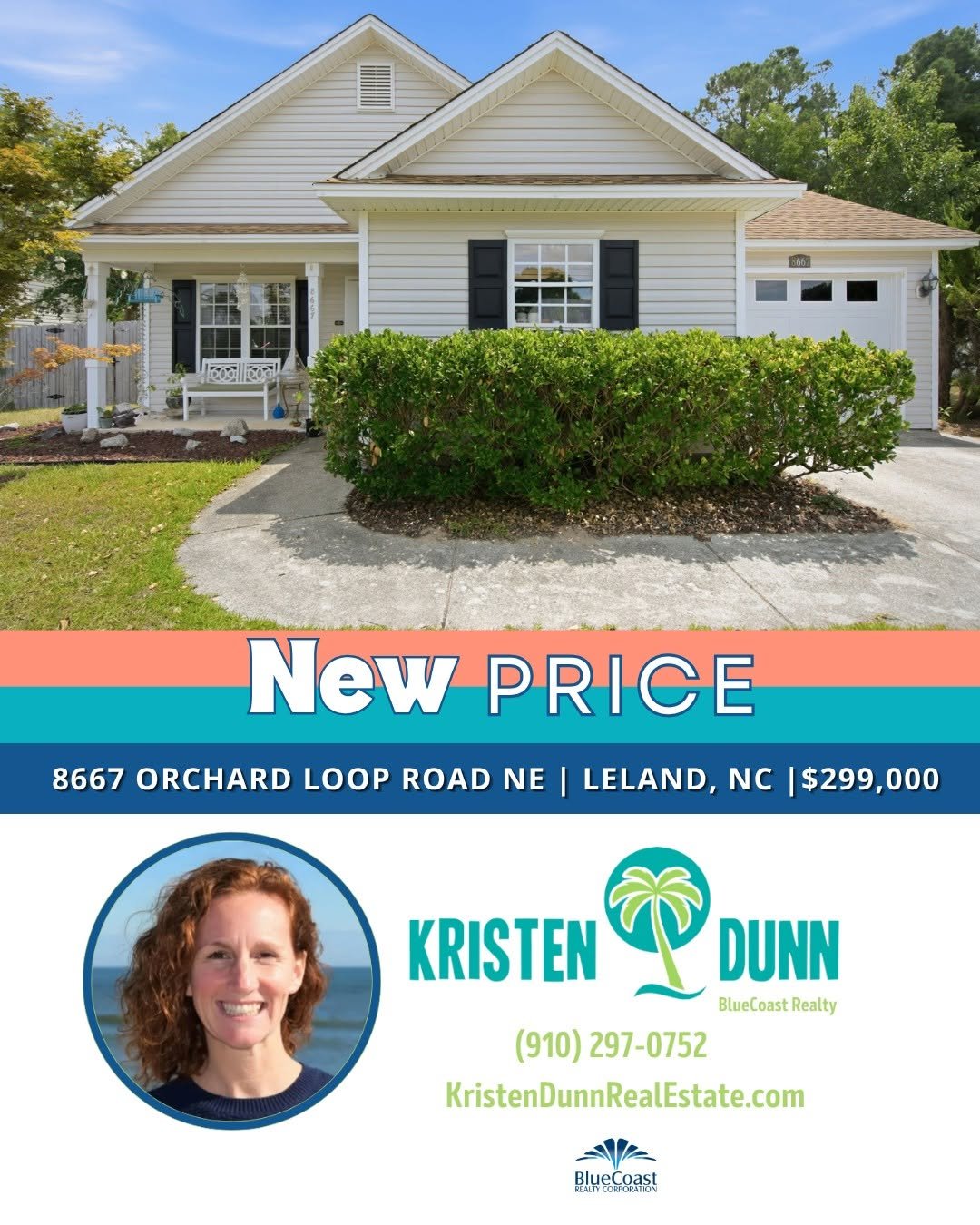
8667 Orchard Loop Road NE, Leland, NC 28451
I live at the beach with my husband and two sons. I enjoy reading, painting and riding my bike around the island. Let’s chat, call or email me today!